




Education Design
Industry Mentoring | Courses & Workshops
Work INtegrated Learning | Testimonials
practice-based research
Education Design
Industry Mentoring | Courses & Workshops
Work INtegrated Learning | Testimonials
practice-based research
I design and facilitate learning experiences that help people think critically, creatively, and ethically about technology and design. Through industry mentoring, workshops, courses, and work integrated learning pathways, I translate complex ideas into accessible, embodied learning practices.
Introduction
This area of my portfolio showcases currently featured projects that demonstrate my skills and experience in developing and delivering future-focused in-person, hybrid and remote educational modules, courses, workshops, research projects. I’ve also included some mentoring and testimonial examples. Each project or testimonial communicates my commitment to excellence and holistic approaches to applied learning research, design and development.
Overview
I design transformative learning experiences that equip students and industry professionals for dynamic careers with adaptive skills within emerging applications of technologies, responsible innovation, and digital design. Selected projects demonstrate the following impacts:
8 years teaching at RMIT University College of Design and Social Context
1,200+ students taught/mentored/supervised
GTS 4.4/5.0 - consistently above institutional averages
3+ courses designed from scratch as inaugural studio lead
Flexibility of teaching and learning design
“Cy’s work was a clear demonstration of his capacity to innovate within constraints… pushing the boundaries of what design and AI can achieve together....his ability to synthesise complex ideas from our multidisciplinary teams at CSIRO, Data 61 and RMIT was instrumental in the development of fine-tuning the base models we were working with.”
R&D Supervision
Industry Internships | Work INtegrated Learning
R&D Supervision
Industry Internships | Work INtegrated Learning
R&D Supervision & Industry Partnerships
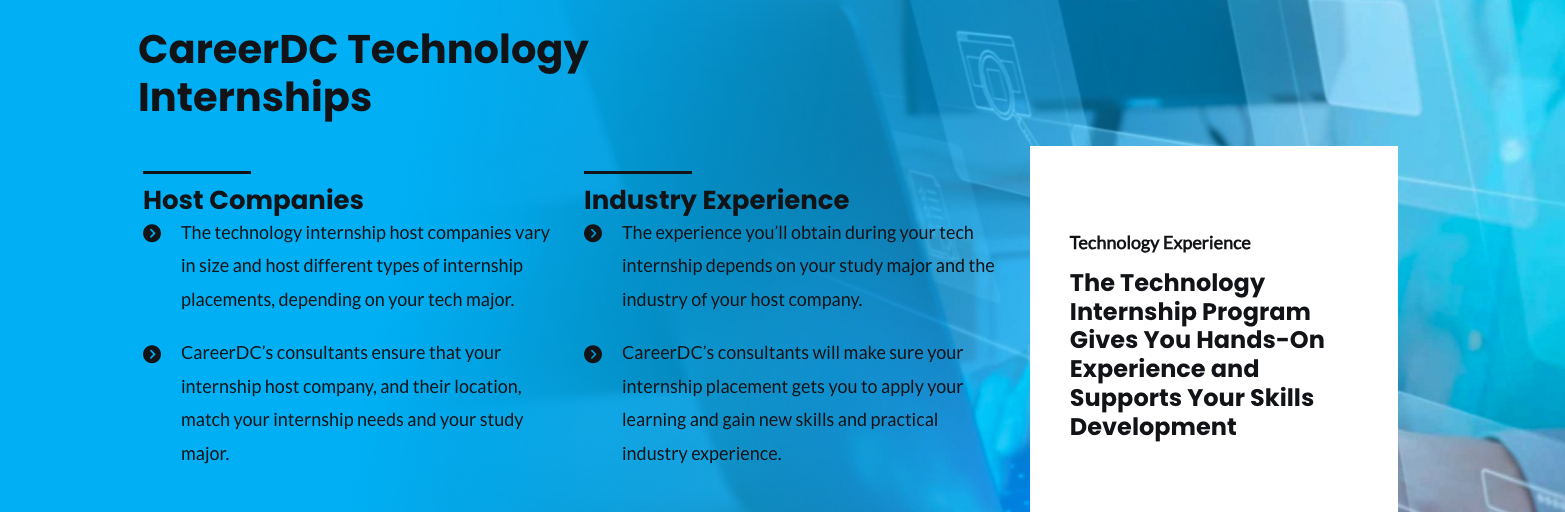
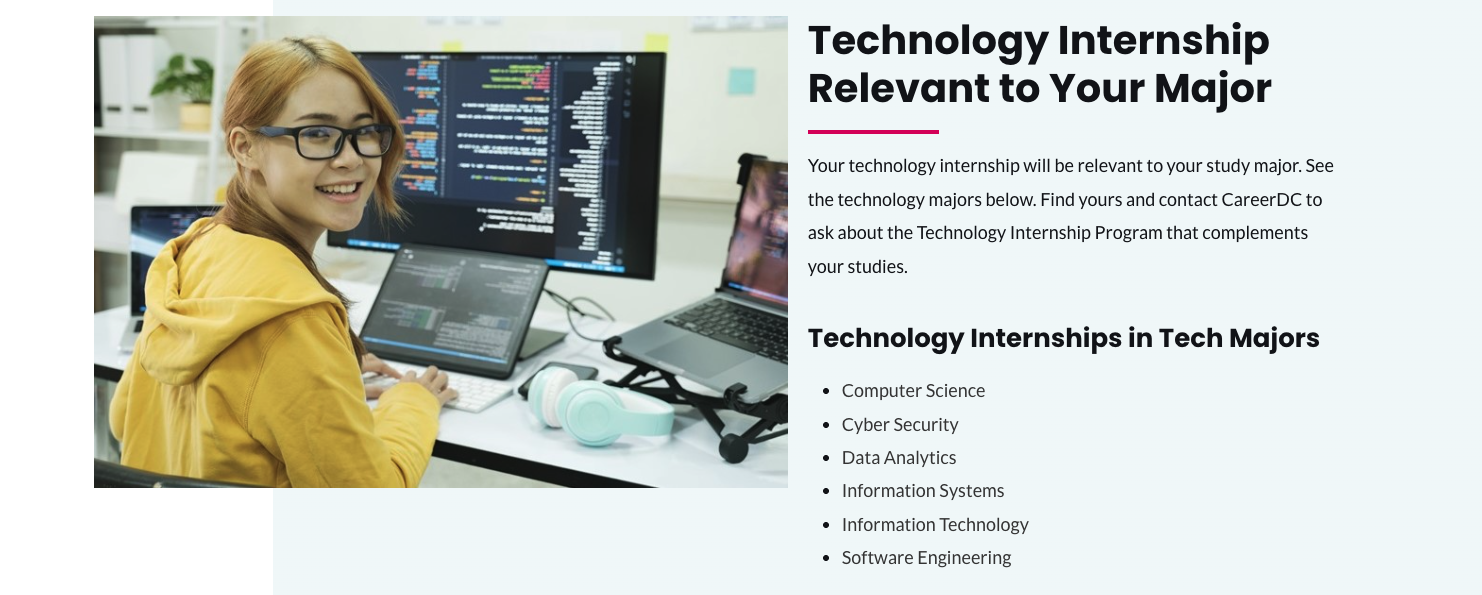
Via my Digital Wellbeing startup - Nurobodi - I collaborate with CareerDC as an industry partner to provide structured, research-based mentoring and Work Integrated Learning (WIL) supervision for postgraduate STEM and Design Research student internship placements.
I have provided graduate and postgraduate research interns from University of Melbourne, UNSW, Monash University as well as providing Practera (WIL) students with research and development supervision across diverse disciplines including design, market research, biomedical engineering, data science, business analytics, and AI development.
This industry-academic partnership model bridges university research training with real-world R&D contexts, providing students with authentic experience in:
Research Focus Areas:
UX applications for digital wellbeing and therapeutic contexts
Multidisciplinary/Interdisciplinary research methods spanning design, psychology, and technology
Affective AI methodologies and emotion recognition systems
Paralinguistic vocal pattern analysis for emotional state mapping
Sound-colour resonance frameworks (sonochromatic interaction design)
Supervision Framework:
Postgraduate students engage in 12 week part-time practice-based research within Nurobodi's active R&D projects, developing technical capabilities while contributing to innovation in affective computing and human-centered AI. The WIL structure ensures research outputs align with both academic requirements and industry application contexts.
This model demonstrates my commitment to creating pathways between academic training and emerging industry needs, particularly in responsible AI and digital wellbeing innovation sectors.
ACMI-RMIT PR & Digi Comms Capstone
Public RElations | communication design
Work INtegrated Learning | INdustry Capstone COurse
mentoring | stakeholder management
ACMI-RMIT PR & Digi Comms Capstone
Public RElations | communication design
Work INtegrated Learning | INdustry Capstone COurse
mentoring | stakeholder management
ACMI-RMIT Public Relations & Digital CommS Capstone (WIL)
Overview
Course Tutor & Industry Liaison Lead
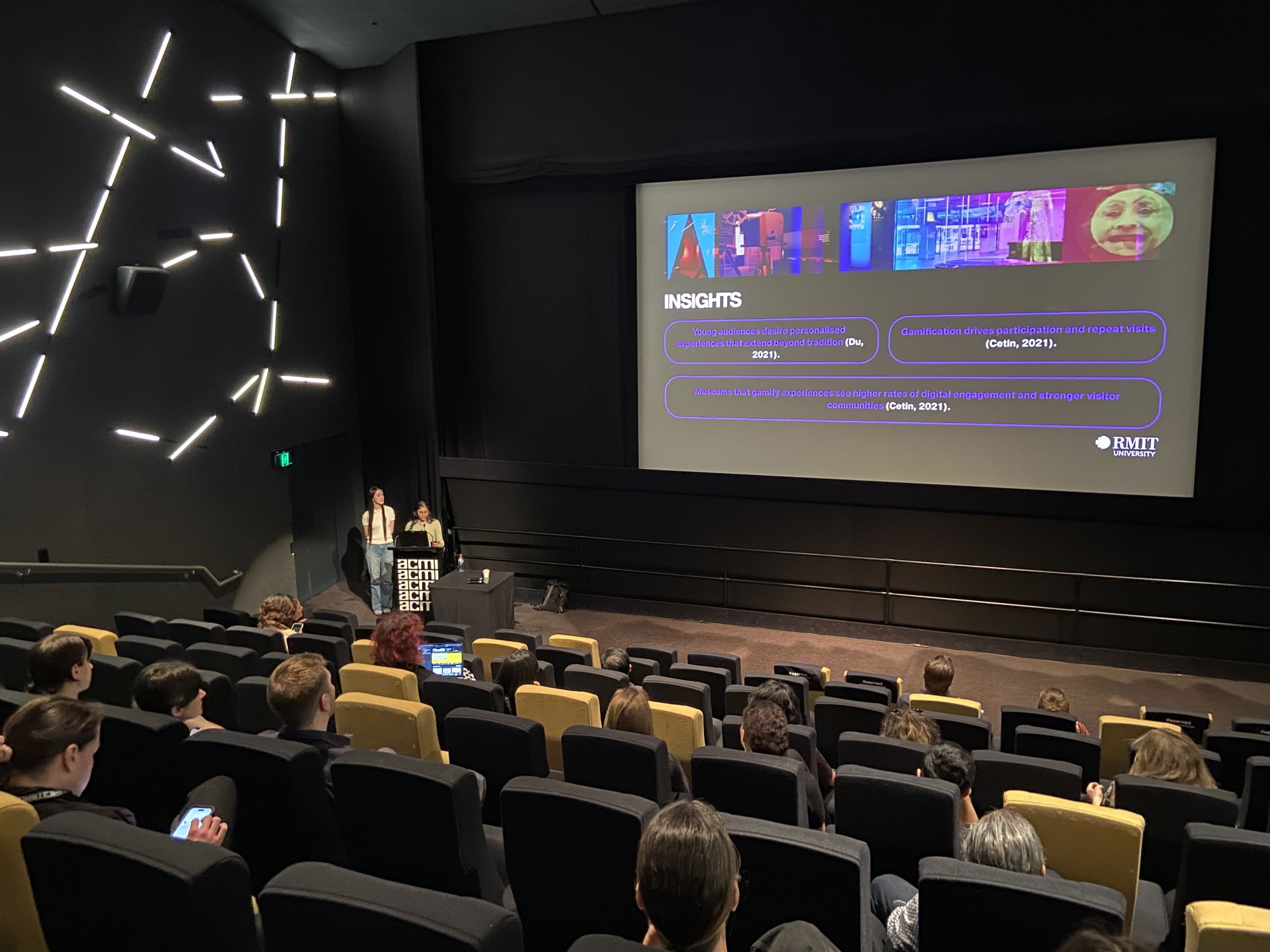
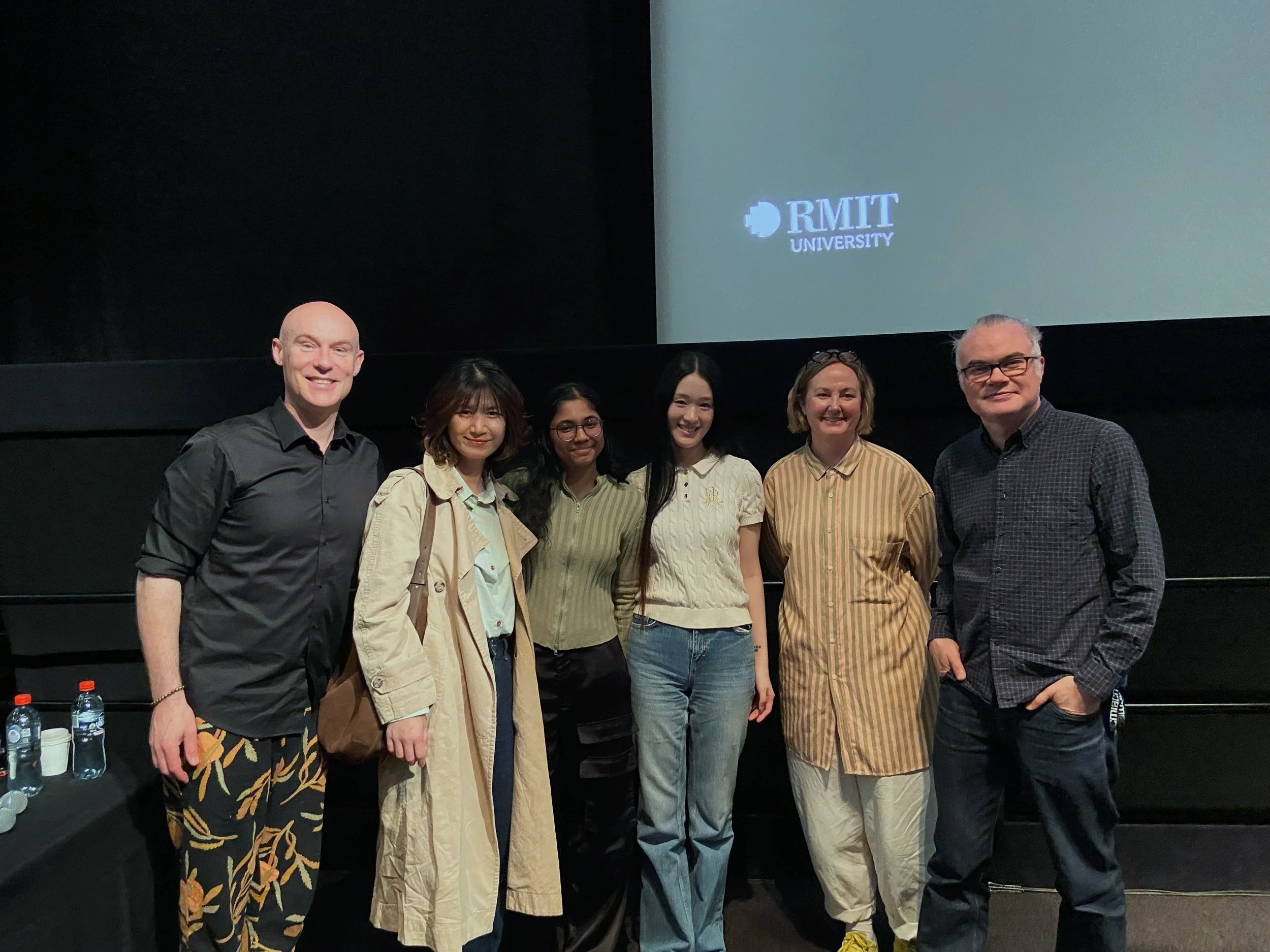
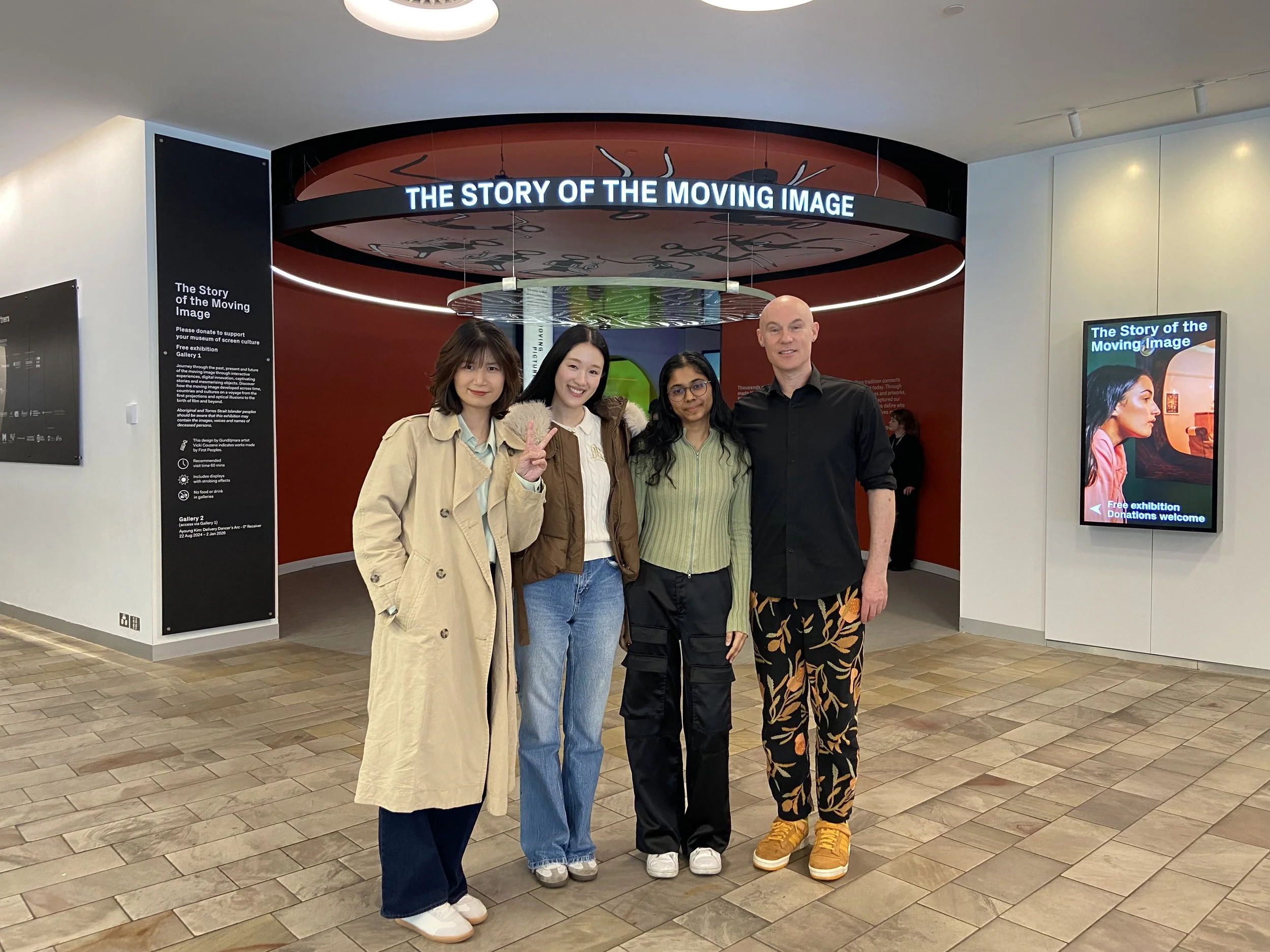
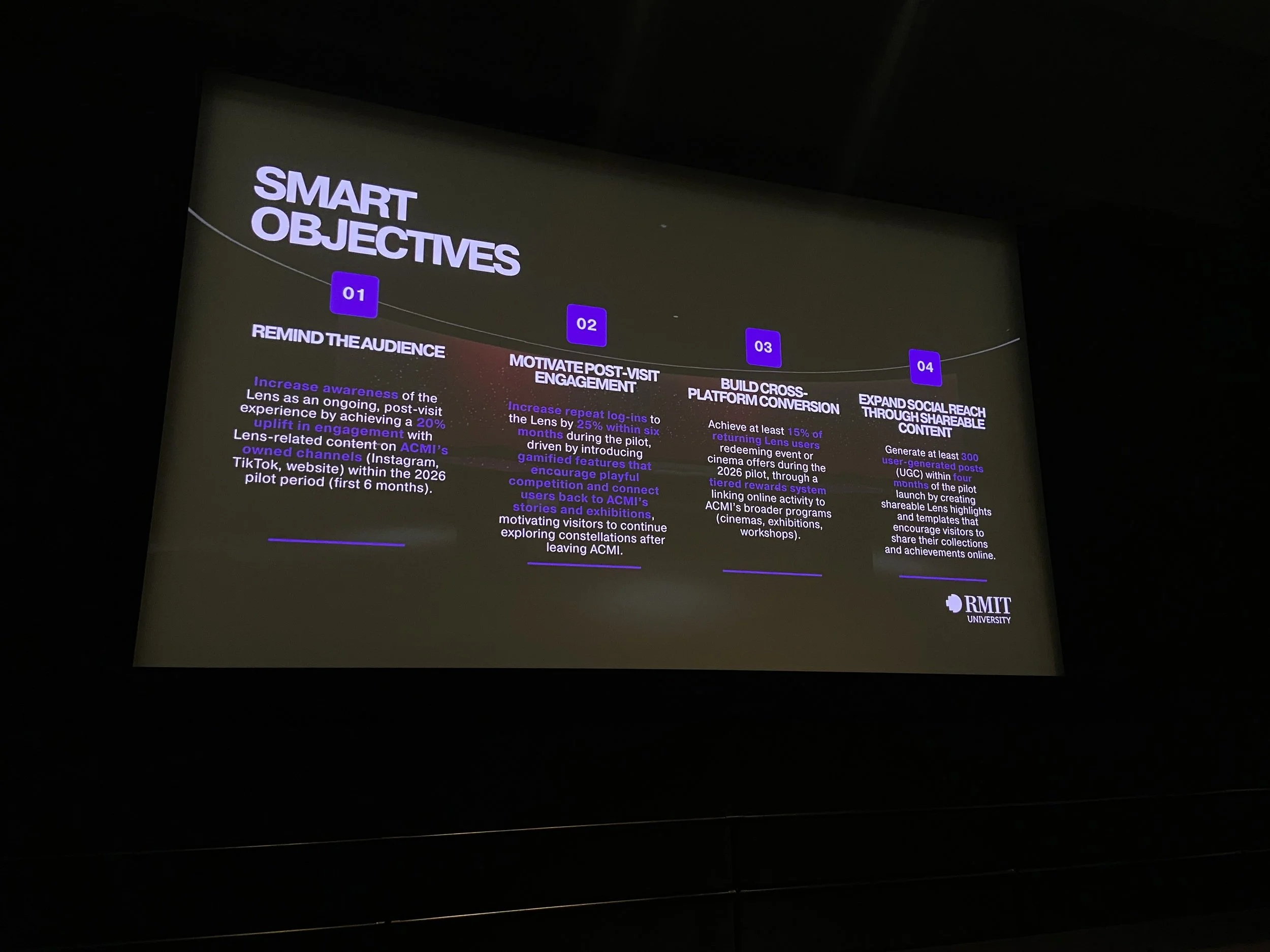
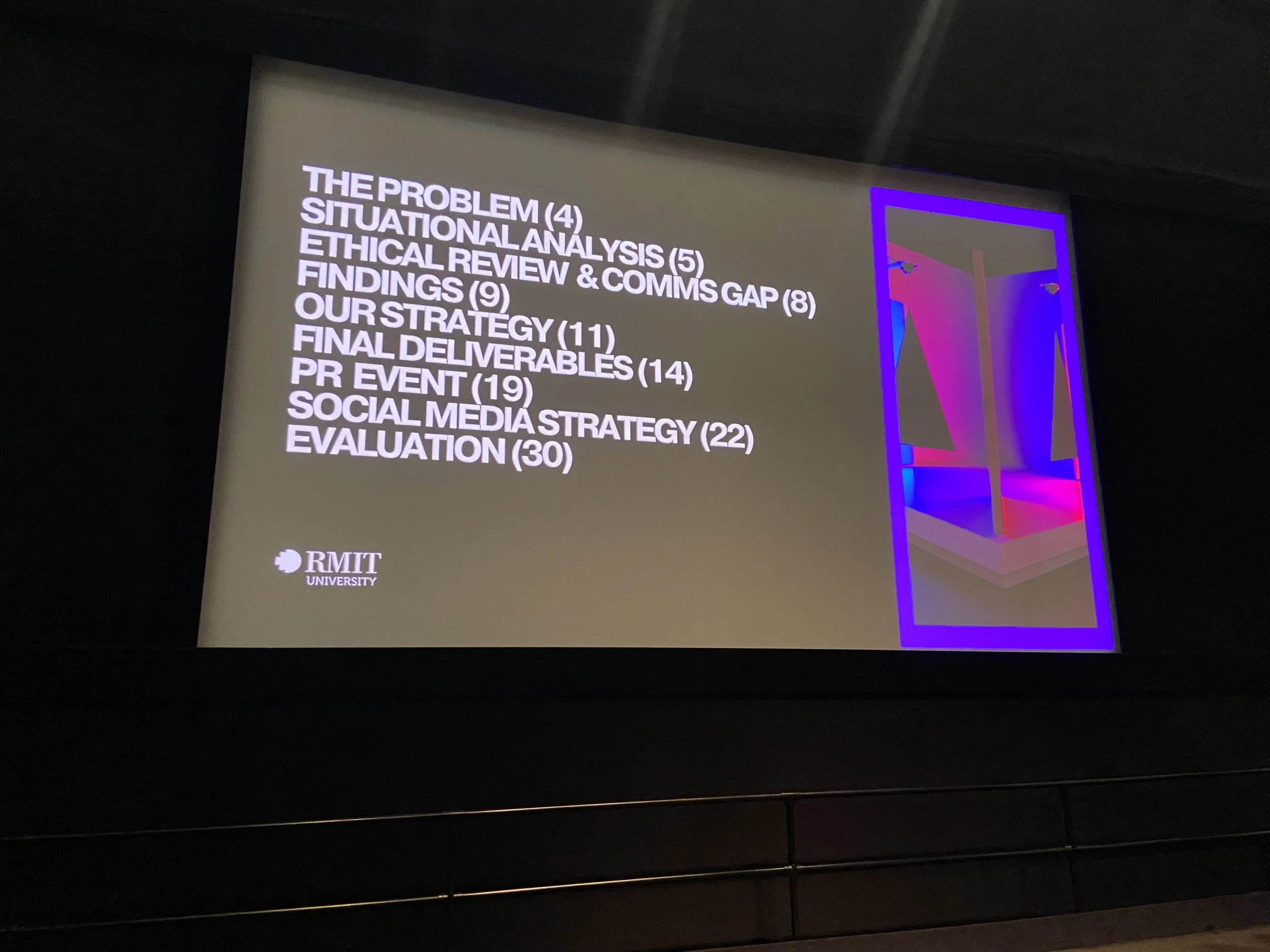
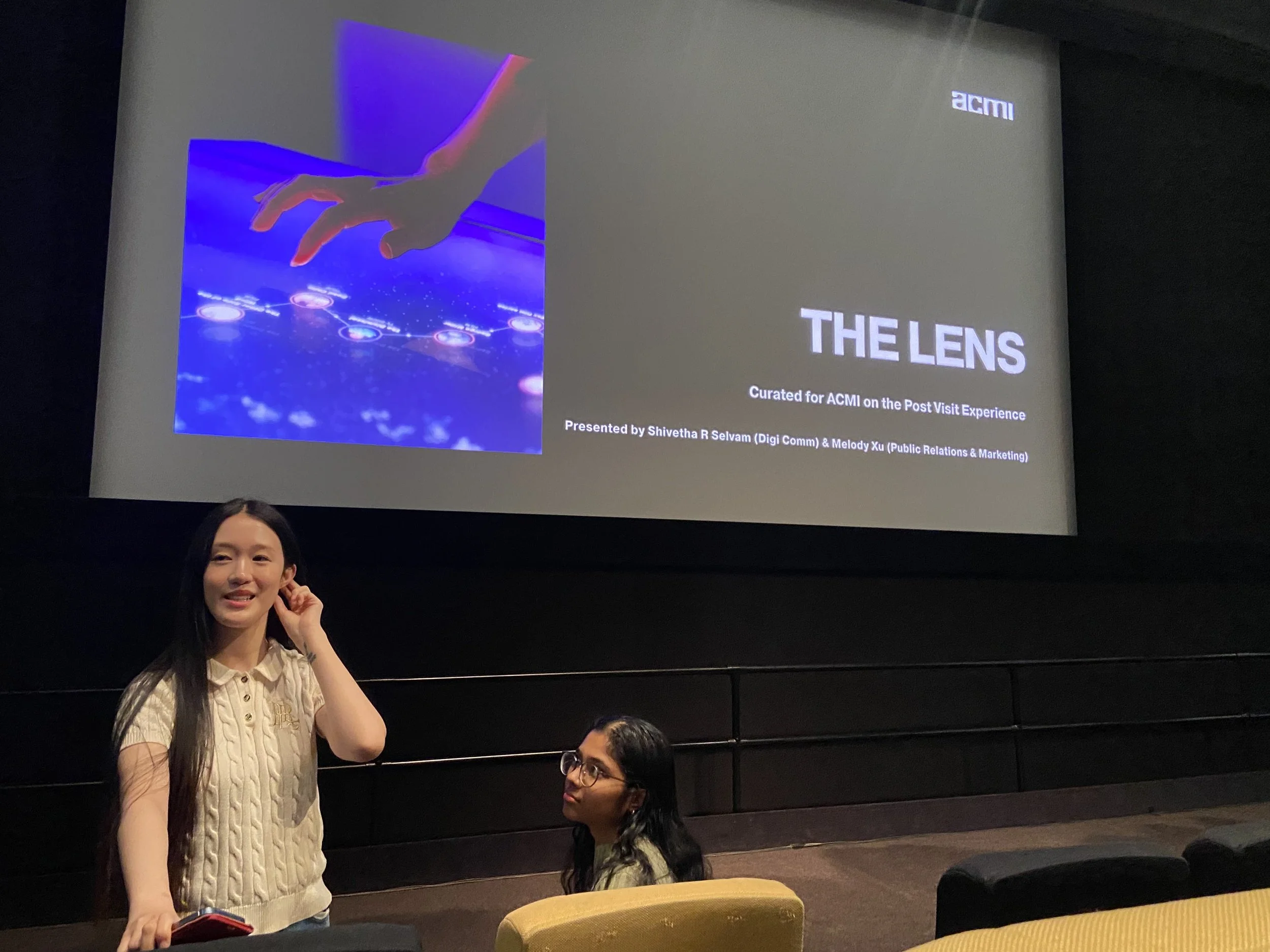
Coordinated industry partnerships with major organizations including ACMI (Australian Centre for the Moving Image) and REGEN. Managed 20-student inaugural cohort through client-based capstone projects within a Work Integrated Learning (WIL) framework, to generate company-based PR and digital communications strategic IP.
Strategic Leadership
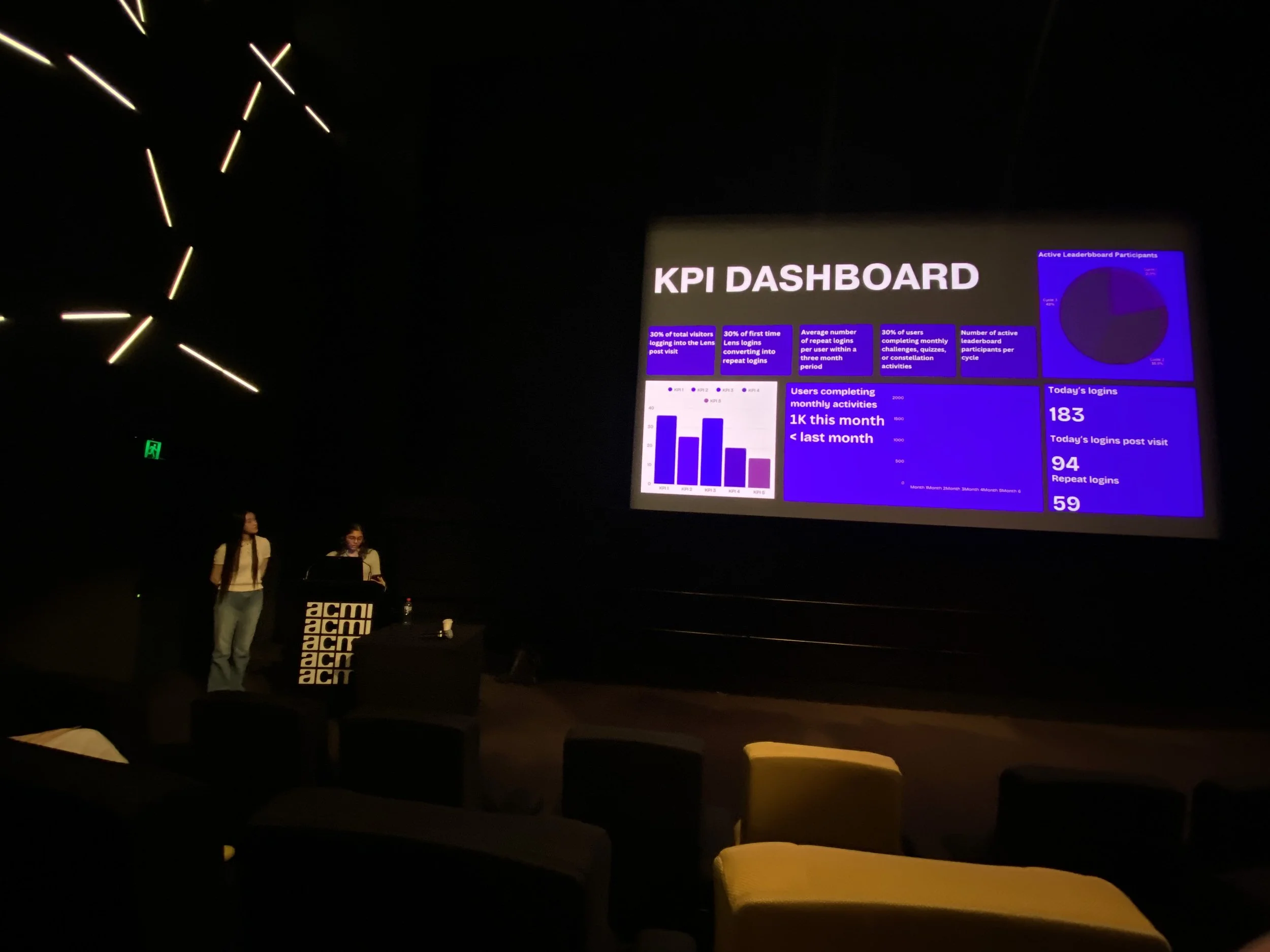
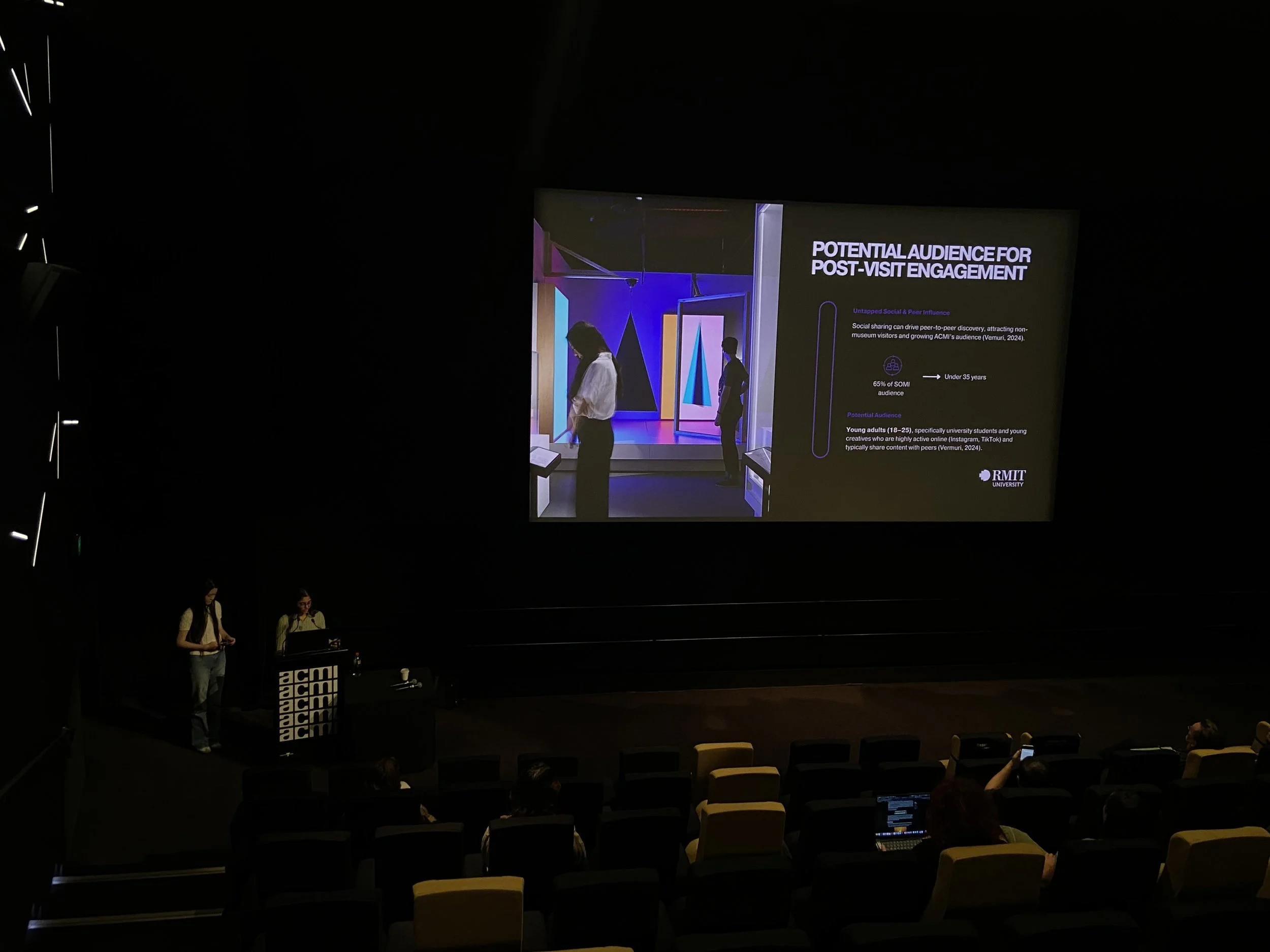
Supervised student teams developing gamification strategies, marketing communications, and PR-related intellectual property for ACMI, including documentation and KPI development. Achieving significant industry validation—student work was presented at ACMI's Annual General Meeting.
Functioned as project manager, director, and liaison, preparing students for professional workplace dynamics through authentic client engagement and real-world deliverables.
Transformative Colour Resonance Environments
audiovisual psychology | resonance research
Cultural semiotics | gamification | 3d design
immersive gallery curation and exhibition design
Transformative Colour Resonance Environments
audiovisual psychology | resonance research
Cultural semiotics | gamification | 3d design
immersive gallery curation and exhibition design
Transformative Colour-Resonance Environments (TCRE)
RMIT Course Design | Affective Design Education | Practice-Based Research
#AffectiveDesign #DesignPsychology #ColourPsychology #AudioVisualDesign DesignByResearch #ProductionDesign #ExhibitionDesign #DigitalMediaCuration #CulturalHeritage #Innovation #ProjectManagement #3D #Gamification
Overview
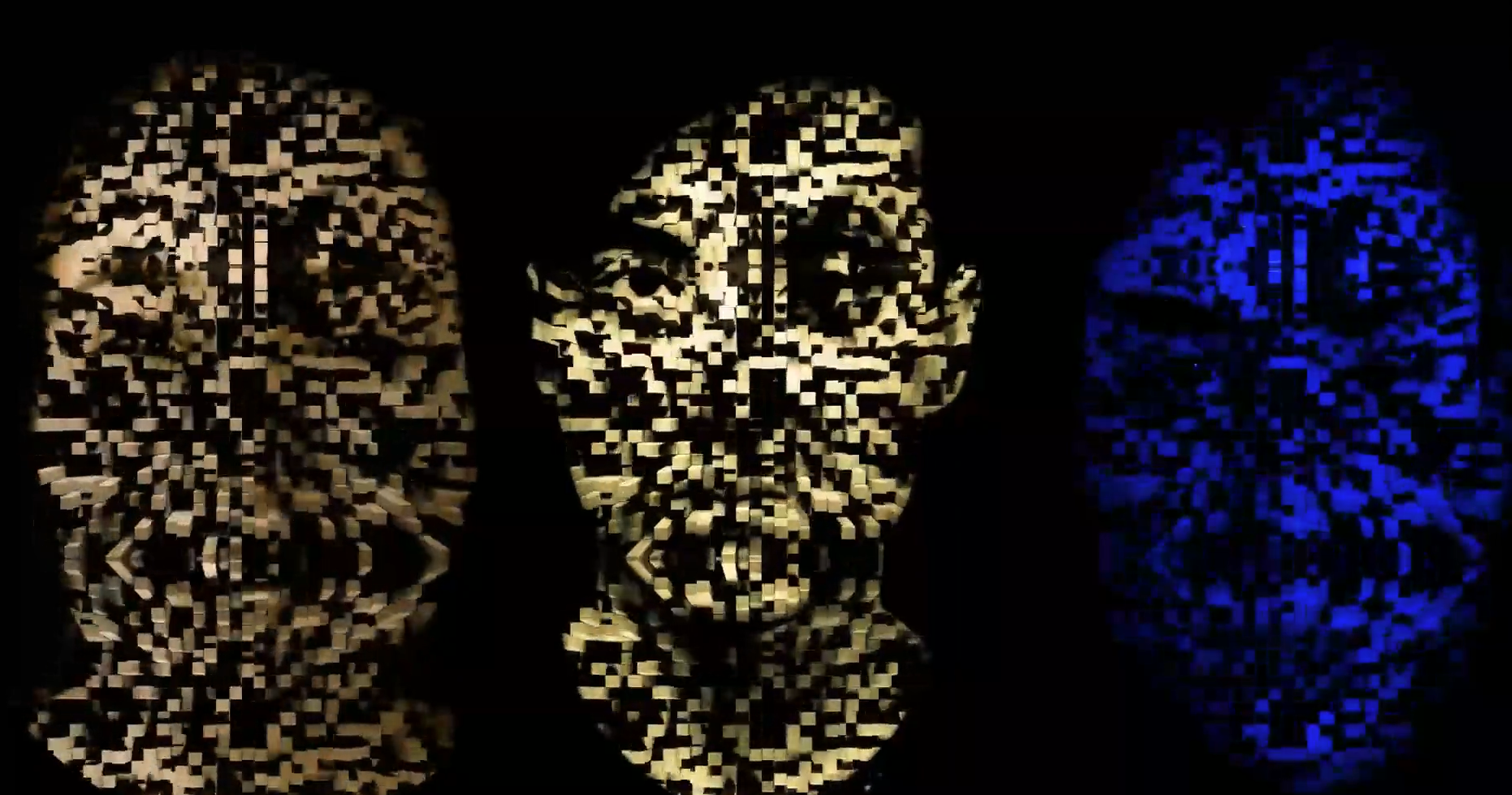
TCRE is a pioneering 24-point course I designed from scratch as inaugural studio lead at RMIT University. It integrates affective design theory, colour psychology, sound design, interaction psychology and virtual exhibition curation, into a comprehensive research-led curriculum that pushes students to understand how audiovisual environments shape emotional and cognitive experience.
Students are inspired to research, prototype, and contextualize how light, colour, and sound create transformative experiences. Individual user-research pathways are integrated within broader fields of UX/interaction design as technical and creative resonance and colour theory and research.


TCRE challenges students to:
Understand colour and sound as spectrum languages for emotional communication
Apply empirical research methodologies to subjective aesthetic decisions
Design experiences that are both scientifically informed and creatively innovative
Document and contextualize their practice-based research as scholarly work
Course Structure & Pedagogy
Research-Led Design Methodology
Students develop individual research pathways exploring:
Colour psychology - How hue, saturation, brightness affect mood and cognition
Sonic resonance - Psychoacoustic principles and frequency-emotion relationships
Audiovisual integration - How sound and light interact to amplify affective impact
Cultural semiotics - Understanding how meaning varies across mediums and contexts
Phase 1: Research & Conceptualization
Literature review of colour theory, sound psychology, affective design
User research and comparative analysis studies
Development of research questions and hypotheses
Conceptual frameworks for audiovisual-colour resonance
Phase 2: Design & Planning
Translation of research into design specifications
Production planning and technical documentation
Iterative prototyping and user testing
Refinement based on empirical and qualitative feedback
Phase 3: Production & Execution
Creation of immersive audiovisual environments
Application of affective design principles to real-world outputs
Technical execution across multiple media (sound, light, interaction)
Documentation of process and decision-making
Phase 4: Contextualisation & Exhibition
Critical reflection on research and outcomes
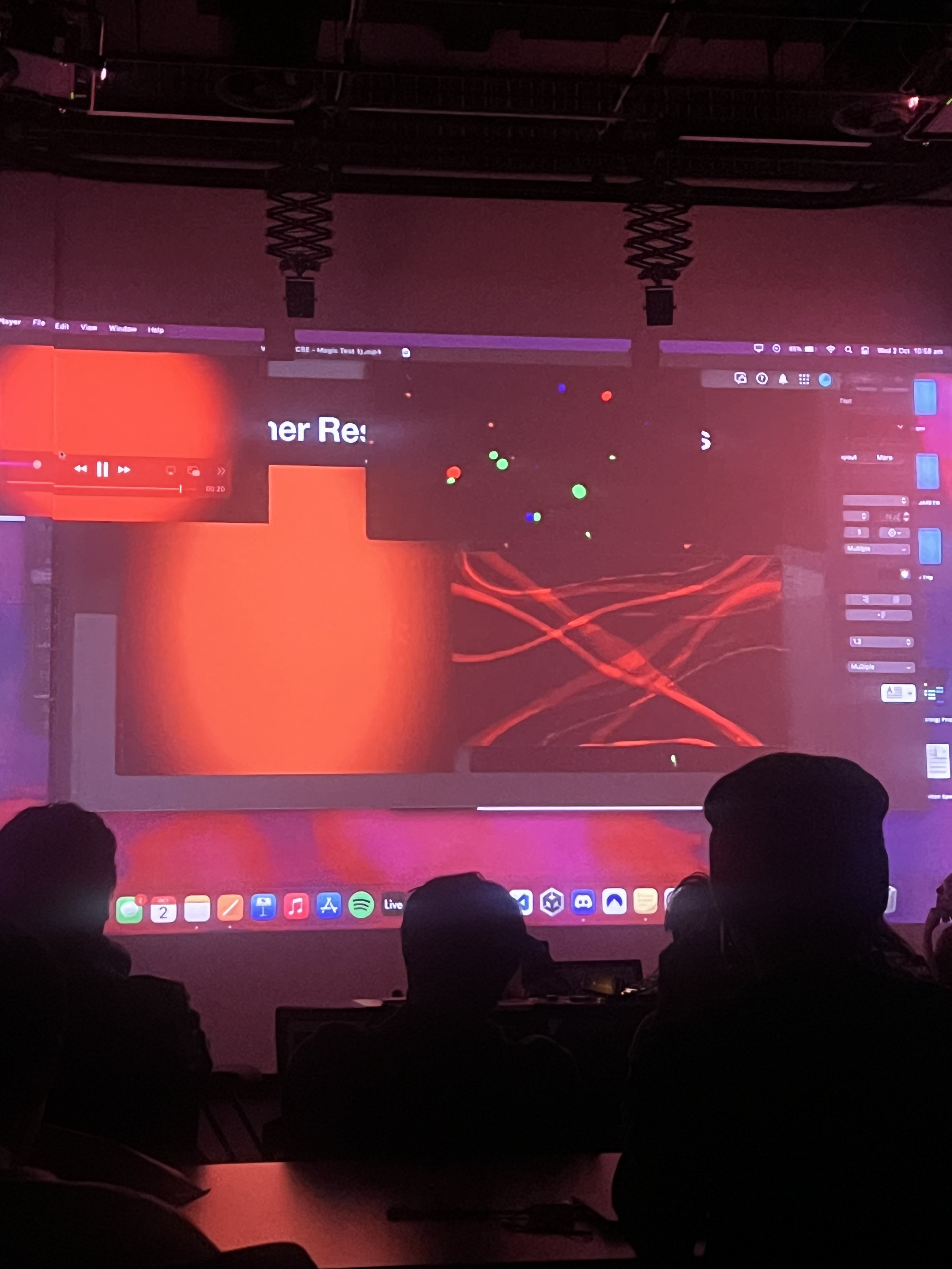
Curation of work within 3D online immersive galleries (Spatial.io)
Professional presentation of both process and product
Exhibition design as final assessment of research communication




Innovative Assessment Design
Publicly Accessible Virtual Galleries
Rather than traditional portfolios, students curate their work in 3D navigable exhibition spaces that serve multiple purposes:
Exhibition of final work - Immersive presentation of audiovisual outcomes
Process documentation - Visual research journey displayed spatially
Skills demonstration - Shows technical mastery of 3D environment design
Professional portfolio piece - Shareable, impressive showcase for future opportunities
This exhibition design functions as both interactive-design-assessment & portfolio artefact—gives that provides designers with real-world value from their skills development that demonstrates the value of interactive practice-based research.
Technical Competencies
Advanced colour theory and application (HSL, RGB, HEX spectrum systems)
Psychoacoustic principles for affective sound design
3D environment design and spatial storytelling
Research documentation and academic writing
Exhibition curation and presentation design
Conceptual Development
Understanding affective design as research discipline
Applying behavioural psychology to creative practice
Systems thinking for experiential design
Critical analysis of cultural and contextual meaning
Ethical frameworks for persuasive design
Professional Practices
Practice-based research methodologies
Iterative design and user testing
Professional documentation and presentation
Cross-disciplinary communication
Portfolio development and self-promotion
Student Outcomes & Impact
Transformative Learning Experiences


Student testimonials highlight the course's profound impact:
"TCRE taught me transferable skills regarding colour, sound, and the interplay between them to shape environments/emotions. It definitely helped me develop my sensitivity to colour, sound and emotions and the incorporation of these attributes within design."
— TaiShang Sun, RMIT Alumni
"I learned practical and academic skills that have profoundly shaped my approach to design, including methods in colour psychology theories, semantic colour mapping, resonance analysis, and affective design principles and processes."
— Wunhao Li, 3D Artist / Game Designer
"After TCRE, I have a completely different understanding of colour as a medium of depth, not just surface value. Furthermore, I am now more confident in my knowledge and also feel more attuned to my surroundings."
— Nimuel Nghi Duong, Digital Designer
Career Scope & Advancement
TCRE graduates have gone on to roles in:
UX/UI design with emotional intelligence focus
Immersive experience design (museums, exhibitions, events)
Architectural lighting and environmental design (Physical and Virtual)
Digital wellbeing and therapeutic applications
Game design and interactive media
Industry & Academic Recognition
Course Innovation
First of its kind at RMIT to fully integrate affective design research into undergraduate curriculum
Interdisciplinary model combining psychology, design, technology, and creative practice
Assessment innovation using 3D virtual galleries as both exhibition and portfolio
Practice-based research focus preparing students for research-led industry roles
Key Insights & Pedagogical Innovation
Research as Creative Process
Students learn that rigorous research doesn't constrain creativity—it deepens it. Understanding the "why" behind color and sound choices makes design more intentional and impactful.
Process as Product
The emphasis on documenting and exhibiting research processes teaches students that design thinking itself is valuable, not just final outputs.
Affective Design as Core Competency
Rather than treating emotion as subjective or secondary, TCRE positions affective awareness as a professional skill that can be learned, practiced, and refined.
Digital Exhibition Literacy
Students gain experience with spatial design, virtual curation, and immersive storytelling—skills increasingly valuable in XR, gaming, and digital experience industries.


Deliverables & Student Work Examples
Student projects have explored:
Circadian rhythm regulation through adaptive lighting systems
Sonic environments for meditation and focus
Color-emotion mapping for therapeutic applications
Immersive installations exploring cultural color symbolism
Interactive audiovisual systems responding to user movement/biometrics
Key Takeaways
Both 12pt and 24-point courses designed from scratch as inaugural studio lead
Research-led pedagogy integrating psychology, design, and technology
Innovative assessment using 3D virtual gallery exhibitions
Transformative student outcomes with consistently exceptional feedback
Industry-relevant skills preparing graduates for emerging design roles
Pedagogical innovation influencing curriculum development across institution
TCRE demonstrates that affective design education can be both academically rigorous and creatively liberating—equipping students with the research skills and emotional intelligence to design meaningful experiences.
Design-STEM Collaboration
networked Systems Innovation |immersive INstallation
Data Visualisation | Distributed media networking
Design-STEM Collaboration
networked Systems Innovation |immersive INstallation
Data Visualisation | Distributed media networking
Affective Identity Design for Multi-SCreen Arrays
#CourseDesign #UX #XR #Interdisciplinary #Strategy #Research #STEM #SpatialDesign #SystemsThinking #Innovation #ProjectManagement

Overview:
This project showcases my interdisciplinary capability in pioneering innovative uses of RMIT’s Virtual Experiences Laboratory (VXLab), specifically by integrating technical development of the advanced tiled display technology within the GOV Lab as an immersive distributed yet synchronised collective co-design expression. Collaborating directly with Dr. Ian Peake, Technical Manager of VXLab, I strategically extended the lab’s media capabilities for XR-enriched industry, creative and educational experiences.
This enabled unprecedented creative opportunities for students while demonstrating new technical possibilities to industry partners, including:
System design research for complex visualisation prototypes
Distributed, collaborative design requiring multiple synchronised views
High-resolution immersive audiovisual rendering
Student projects in composite empathy mapping and identity visualisation


Student UX Affective Design Mapping


Composite Empathy/Identity Testing


Audiovisual Affective Production Design Lecture


Deliverables:
Interdisciplinary Design/STEM strategic project modelling
Interdisciplinary Design/STEM technical/creative design research and course design
Co-Design, development and deployment of custom tools and methods for ultra-high-resolution multi-screen array integrations.
Agile management of student learning pathways and project assets within technical resource limitations.
Innovative integration of advanced A/V technologies into overlapping Design/STEM educational contexts.
Enhanced immersive multimedia learning experiences above and beyond benchmark standard visual practice.
Key Insights:
This initiative highlights the effectiveness of interdisciplinary and strategic design thinking in navigating resource constraints to innovate educational technologies. It exemplifies how agile project management and effective communication among interdisciplinary teams and stakeholders can foster significant technological advancement and amplify institutional capacity for Design/STEM integrations as a way to meet evolving industry demands and foster creative education and research innovation.


The project exemplified interdisciplinary STEM/Design collaboration and agile project management within technical resource constraints.
Key outcomes:
Custom visualisation tool development | Interdisciplinary collaboration frameworks | Technical innovation in educational contexts | Industry partnership demonstration | Stakeholder management | Production Design IP Development
REA AGILE UX Co-Design Workshops
ux Industry workshops | Agile UX CO-Design
Workshop Facilitation | Stakeholder management
REA AGILE UX Co-Design Workshops
ux Industry workshops | Agile UX CO-Design
Workshop Facilitation | Stakeholder management
Agile UX CO-Design Workshop Facilitation
#UX #Agile #REA #Industry #CoDesign #DesignLead #Workshop #Facilitation #Mentoring
Introduction:
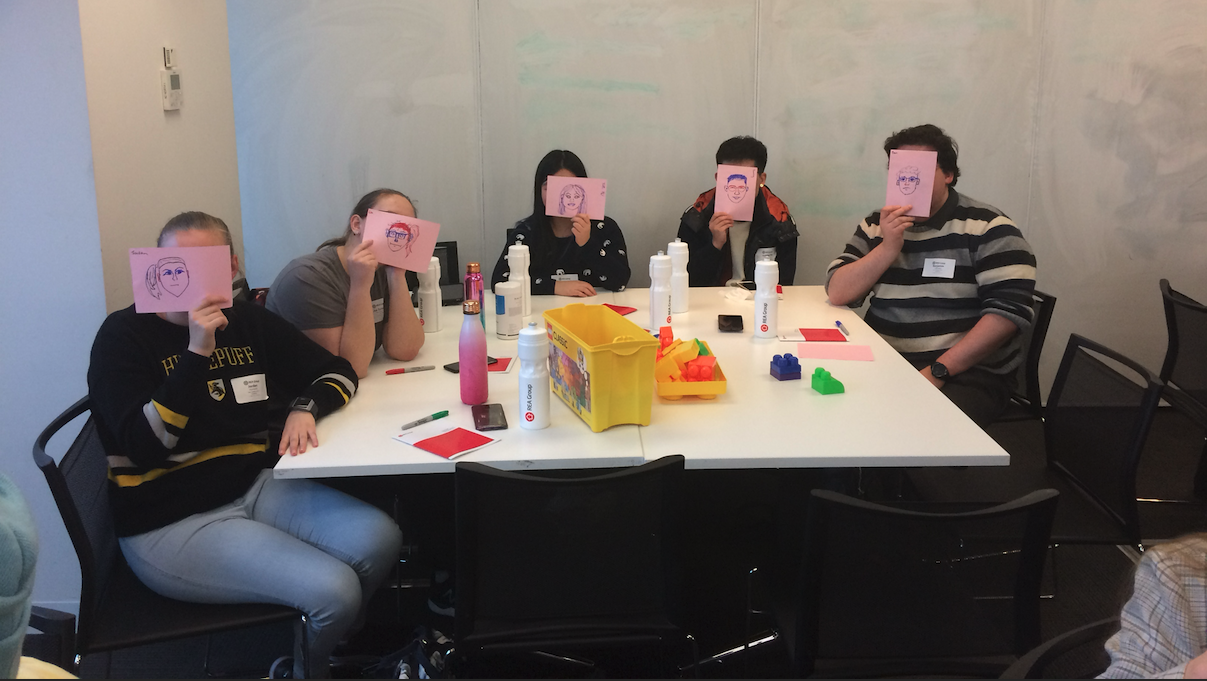
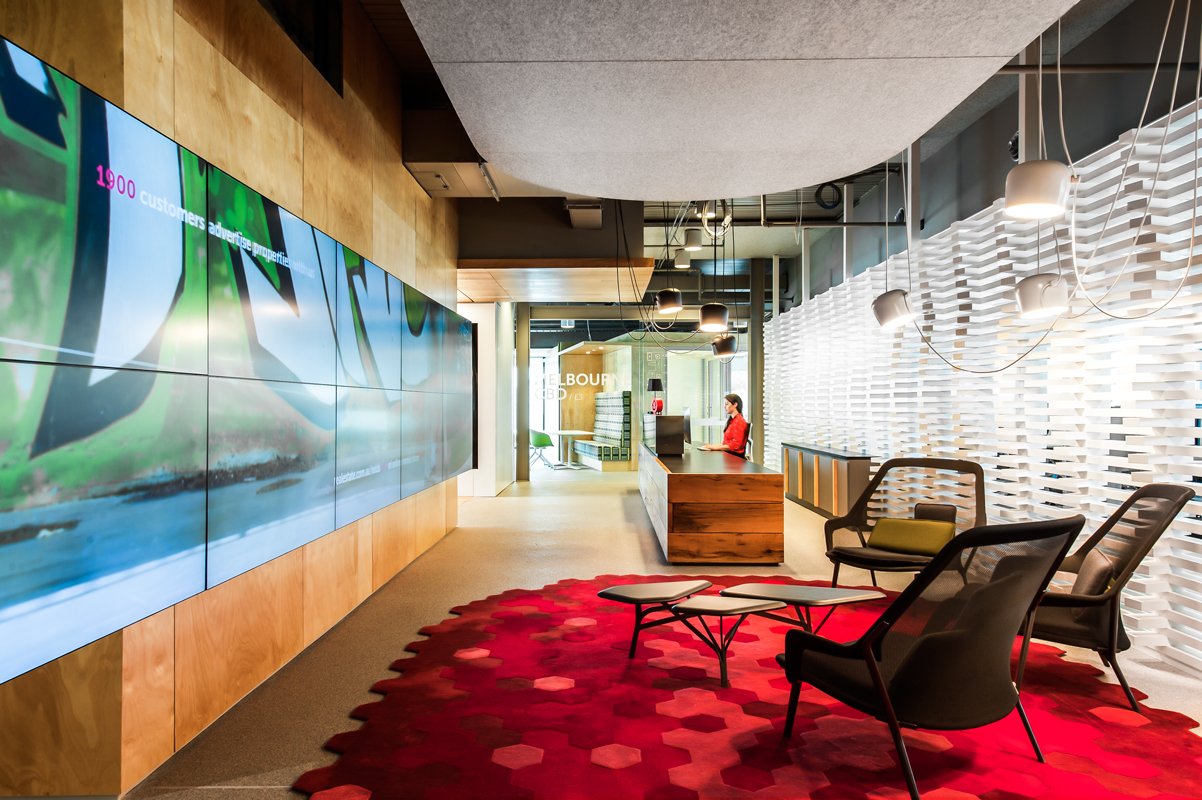
As part of an co-facilitated industry based Agile UX workshop between RMIT and REA Group, we explored how Agile methodologies and user-centred design intersect in real-world scenarios. The workshop, co-facilitated with REA’s UX practitioners, was a hands-on, high-energy session designed to simulate iterative sprint design thinking within an Agile framework, while contrasting this with traditional Waterfall approaches.

Overview:
The workshop opened with a crash-course on Agile principles, foregrounding the central question:
"What does Agile really look like — and how does it differ from Waterfall in day-to-day practice?"
With dual projections and real-time facilitation, participants were introduced to these contrasting models. Rather than treating them as abstract frameworks, the session grounded their differences through role-play and UX artefact production, inviting participants to embody Waterfall and Agile mindsets as they progressed through the design stages.
Phase 1: User Understanding & Persona Development:
To lay a strong foundation in user-centred thinking, participants began by sketching quick self-portraits based on partner interviews. While this exercise brought levity and connection, it also introduced key UX research skills:
Empathy building
User observation
Communication through artefacts
These illustrations served as proto-personas, catalysing discussions around behavioural patterns, motivations, and assumptions. Participants began identifying user needs and pain points — critical to shaping meaningful product concepts.


Phase 2: Mapping Agile vs Waterfall UX Workflows:
With personas in hand, teams transitioned into visualising project journeys using both Waterfall and Agile UX models:
Waterfall tracks emphasized linearity: research → design → development → testing → launch.
Agile tracks prioritized iteration: sprint-based cycles where discovery, prototyping, and feedback looped continuously.
These workflows were visualised and acted out — with roles like designer, developer, and stakeholder assigned — to physically embody the pace, rigidity, and flexibility of each approach. This helped clarify how Agile UX supports emergent learning and rapid pivoting based on user feedback.
Phase 3: Paper Prototyping:
In small teams, students translated insights into low-fidelity concepts using paper interfaces. These sketches and mockups served as rapid, testable expressions of early ideas — echoing Lean UX principles:
Test early, test often
Design for outcomes, not outputs
Paper prototypes allowed teams to explore user flows, wireframes, and interface logic before committing to high-fidelity design or development decisions.


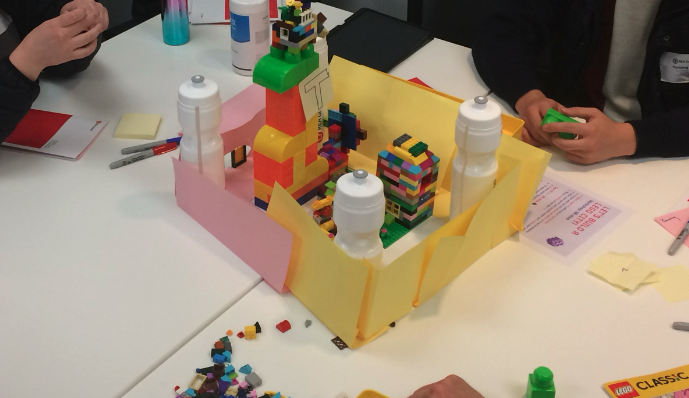
Phase 4: Lego-Based 3D UX Modelling:
Building on the paper prototypes, teams moved into tactile prototyping using Lego. This phase invited participants to model their UX concepts in three-dimensional space:
Interface zones became modular blocks
User paths were constructed as physical journeys
Interaction flows became spatialised narratives
This playful-yet-strategic exercise challenged teams to translate abstract digital experiences into tangible, spatial metaphors — deepening their understanding of UX architecture and service touchpoints.
Through collaborative iteration, user needs were mapped physically into 3D systems — bringing together principles of affordance, accessibility, user flow, and hierarchy in unexpected ways.




Insights:
Throughout the session, students practiced not only design ideation but also Agile rituals:
Daily stand-up style check-ins
Retrospectives at each phase
Collaborative role-switching between user, designer, and facilitator
The workshop reinforced that UX is not a phase, but a continuous presence within Agile teams — supporting ongoing discovery, validation, and refinement.
From playful self-portraits to robust Lego ecosystems, the session made space for creativity, critical thinking, and real-world UX agility — all while demystifying how Agile and Waterfall feel when enacted in practice.
AI Research and Design
Industry-AI integration | UX | CX
research supervision | Devlopment
interaction prototyping
AI Research and Design
Industry-AI integration | UX | CX
research supervision | Devlopment
interaction prototyping
Nurobodi/CSIRO/RMIT: AI/CX/UX Industry Benchmarks
#AI #CX #UX #Industry #Research #Strategy #Project Management
“Cy’s focal use of AI to optimise the capacity of the CX design and end user feedback loop on ethical considerations was a highly novel application of the technology....his design research and process was not just demonstrating proof of concepts — it was a pedagogical model for future-facing design education.”
Overview:
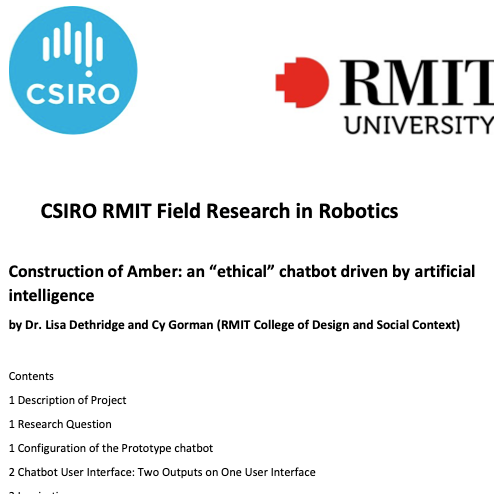
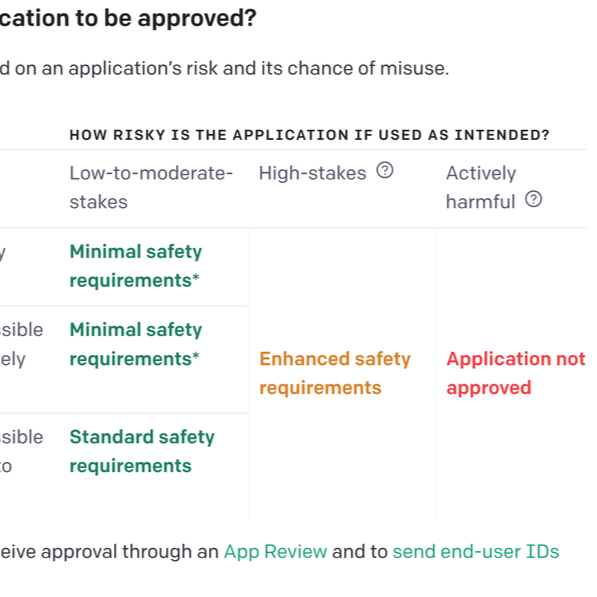
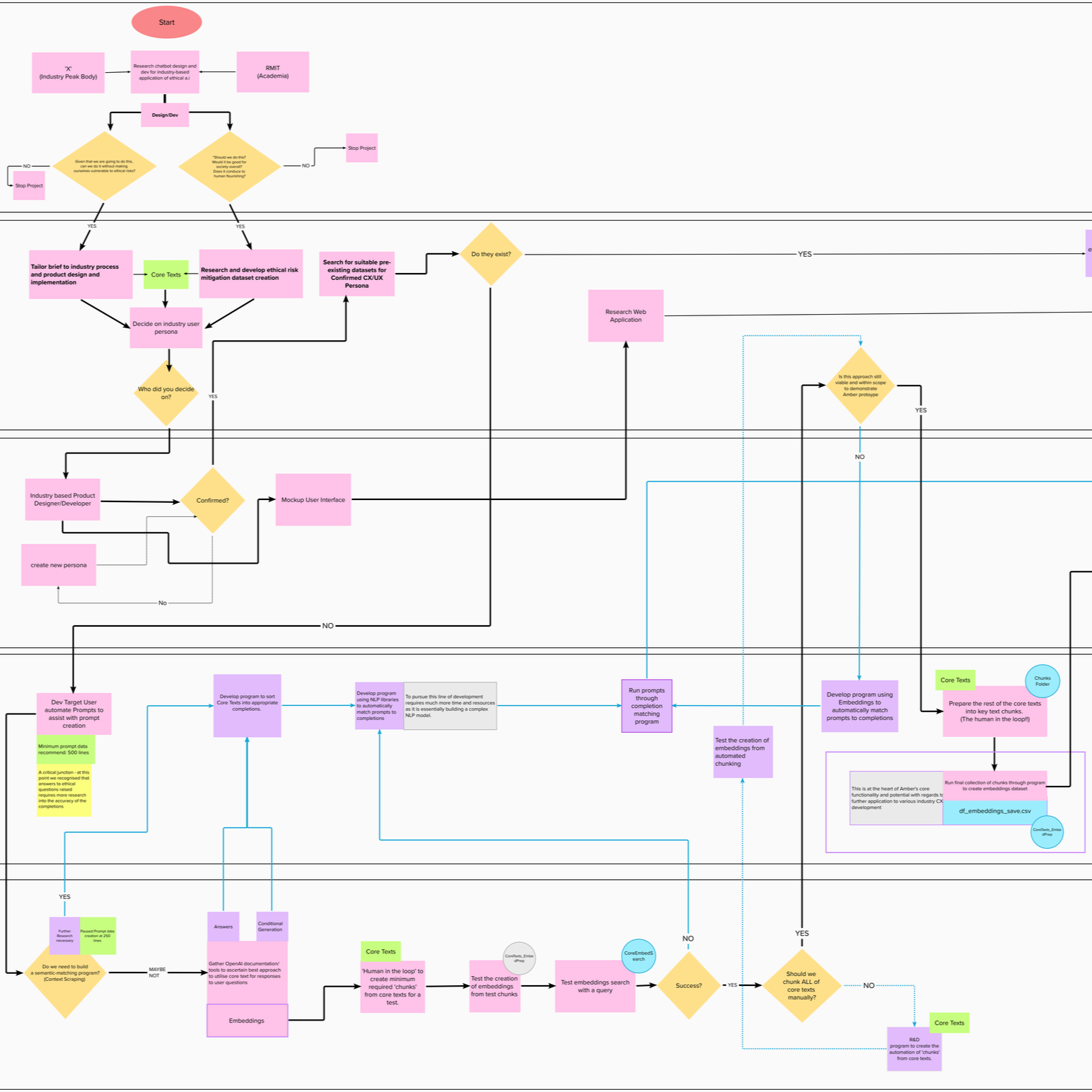
IN this project supervised design and development of industry-focused AI ethics frameworks. Alongside seasoned RMIT senior researcher Dr. Lisa Dethridge and Dr Justine Lacey of CSIRO’s Responsible Innovation Future Science Platform, and Data61 consultants, myself and my Nurobodi team engaged in the design and development of a very different kind of AI/CX/UX service design. Of primary importance was investigating the “ethics” of AI programming in both process and product outcomes. We sought to identify key problems, barriers, and opportunities and to develop ethical solutions while demonstrating human-centered design (HCD), UX, and User Interface design methodologies to generate a low-cost, rapid prototyping of a minimum viable product (MVP).


Project Summary:
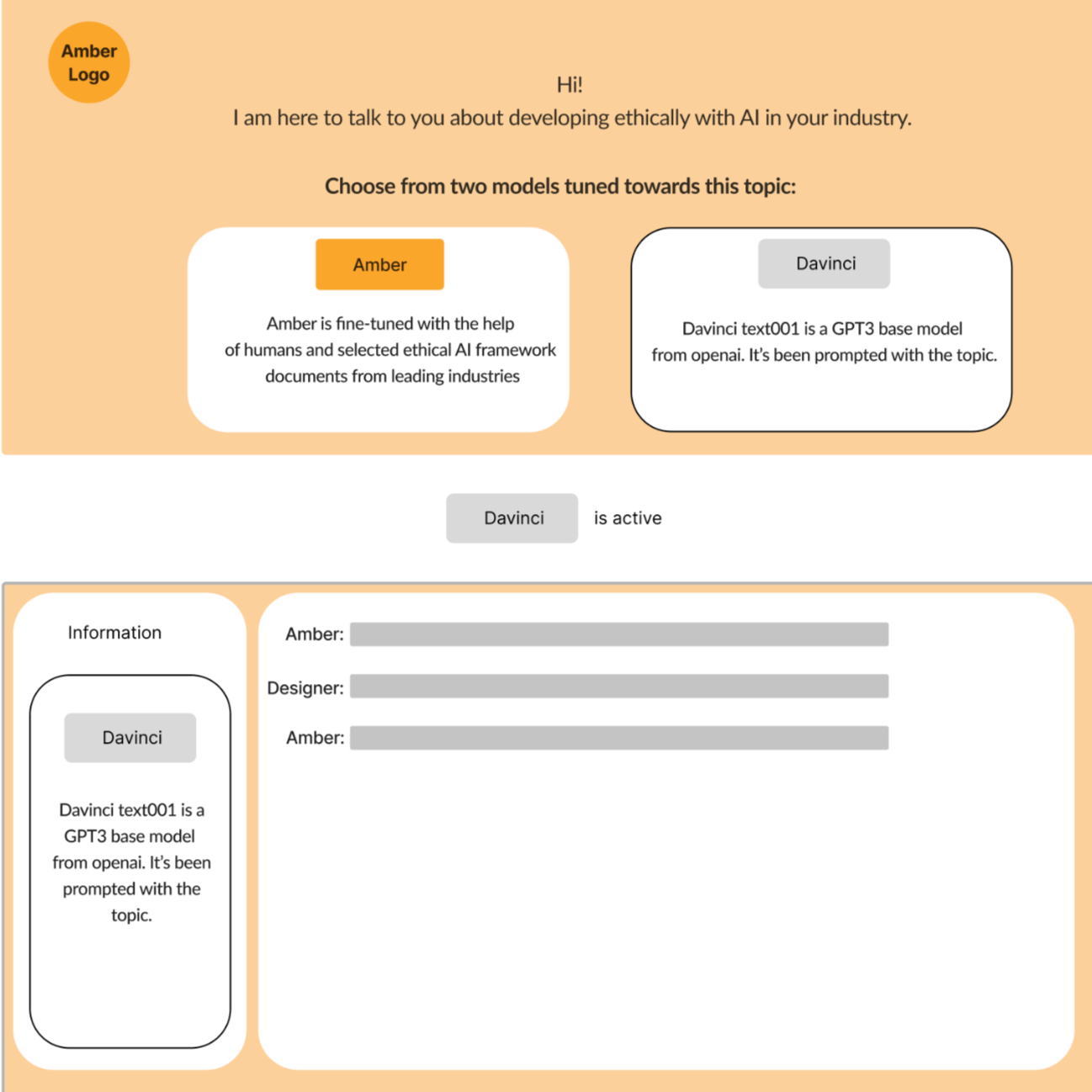
The hypothesis with Project Amber explored interdisciplinary research, design and development possibilities to design and fine-tune a base model to interact based on fine-tuned knowledge of international standards for ethics and responsible tech innovations practices. The project sought to foreground the importance of the human in the loop and mindfulness as a mechanic of research, design and development of industry CX standards for responsible and explainable AI applications.
Deliverables:
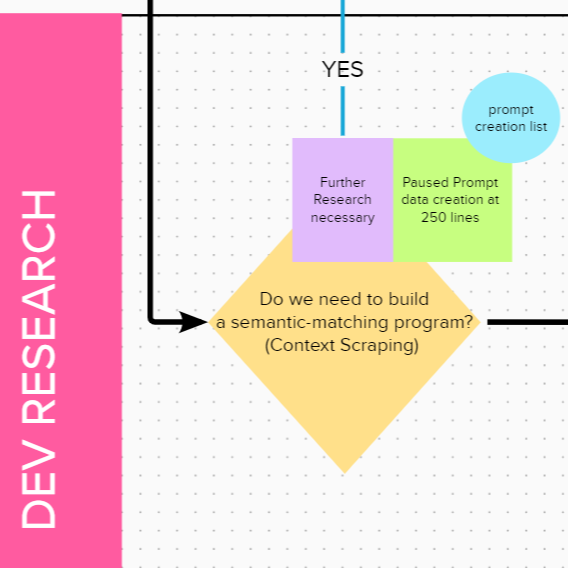
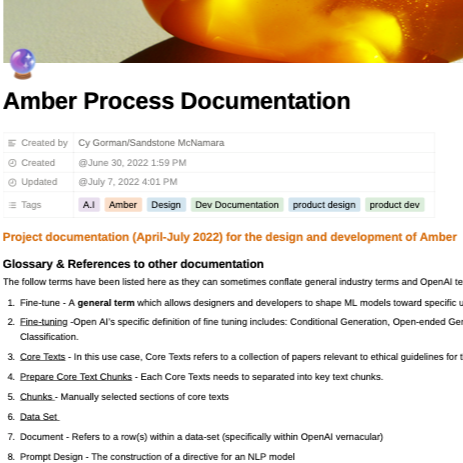
Research designs and documentation
Working prototype development examples
Present methods for extrapolating foundational research insights
Devise directives for human-AI co-reasoning based on comparisons of base model vs Amber (fine-tuned) outputs
Synthesise recommendations for future research, design and development of strategic industry based XAI integrations
Summarise and present research design and development documentation to RMIT/CSIRO/Data61 analysts


Key Insights:
Despite being a legacy study in GPTs, LLMs and AI in general (2022 is eons ago), this project was, and still is, an extremely innovative and timely interdisciplinary project as well as cautionary tale. As well as its research, design and development deliverables, it highlights the importance of interdisciplinary designers as responsible ‘humans in the loop’, as necessary for ongoing XAI systems integration.
The project also stands as a strong portfolio example that focuses on peak body benchmark research and industry partnerships involving high-level strategic stakeholders invested in co-design and strategic interaction frameworks for the design, development and deployment of responsible and explainable AI (XAI) integrations.
“I am keen to see where Cy’s work will lead to valuable insight, innovations and contributions that will
resonate across both industry, academic and policy domains.”
Digitising RMIT Capitol Theatre
RMIT/Capitol Theatre:
Collaborative Pre-Production,
Production & Post-Production
XR Project Design
Digitising RMIT Capitol Theatre
RMIT/Capitol Theatre:
Collaborative Pre-Production,
Production & Post-Production
XR Project Design
Digitising the Capitol Theatre in 360 For Immersive Affective Design Video
CourseDesign #AffectiveDesign #UX #Interactive #SpatialDesign #Research #XREnvironments #360Video #Innovation #ProjectManagement
Overview
Pioneered immersive 360° filmmaking curriculum where students digitized Melbourne's historic Capitol Theatre using Insta360 Pro 2 camera systems, learning spatial storytelling and extended reality (XR) production pipelines. My role as Director of Photography and Production Manager ensured students navigated both creative and technical complexities of XR filmmaking, simulating real-world film production studio workflows.
The act of "premiering" their films within the virtual Capitol theatre created powerful affective motivation—making the experience tangible and emotionally resonant while teaching spatial literacy in digital storytelling.
Students worked through three distinct phases:
Preproduction: Location scouting, spatial storyboards, 360° production design
Production: 8K stereoscopic capture, sound spatialisation, multi-terabyte data management
Postproduction: Innovative technique of embedding their own films within the virtual Capitol cinema screen


1. Preproduction (Location-Specific)
Students visited the Capitol Theatre to scout the space, develop spatial storyboards, and identify key cinematic perspectives. This phase emphasized production design for 360° capture — a unique challenge requiring spatial choreography and non-linear thinking.
2. Production (On-Site Filming with Insta360 Pro 2)
Using the Insta360 Pro 2, students executed location shoots in 8K stereoscopic video, engaging in:
Camera rig operation and spatial blocking
Sound spatialisation and ambient audio capture
Data wrangling and file management in a multi-terabyte workflow
Students also learned to convert raw 8K footage to 4K for accessible postproduction editing.
3. Postproduction (Remote/Hybrid)
The final stage explored an innovative technique: embedding students’ standard UHD video projects within the Capitol Theatre’s virtual cinema screen. The result was a layered spatial montage — their own narrative short films premiered inside the virtual Capitol. This simulated the prestige of screening at an iconic venue, while maintaining a fully immersive 360° environment.
Key Insights
Spatial storytelling changes how students understand screen direction and audience agency.
Emergent pipelines require interdisciplinary coordination.
Simulating real-world prestige environments creates affective motivation.
Blended learning supports real-world readiness.
Digitising the Capitol Theatre in 360 not only introduced students to extended reality filmmaking but also provided a framework for collaboration, creative ownership, and spatial literacy in digital storytelling. The outcome was more than just immersive content — it was a generative learning environment, equipping students to prototype the future of cinema itself.
Future Learn: RMIT Blockchain Innovation
Future Learn:
RMIT Blockchain Innovation
& Learning Experience Design
Future Learn: RMIT Blockchain Innovation
Future Learn:
RMIT Blockchain Innovation
& Learning Experience Design
RMIT Blockchain: Innovation Hub UX
#CX #UX #Fintech #Blockchain #Research #Strategy #Course Design


Overview:
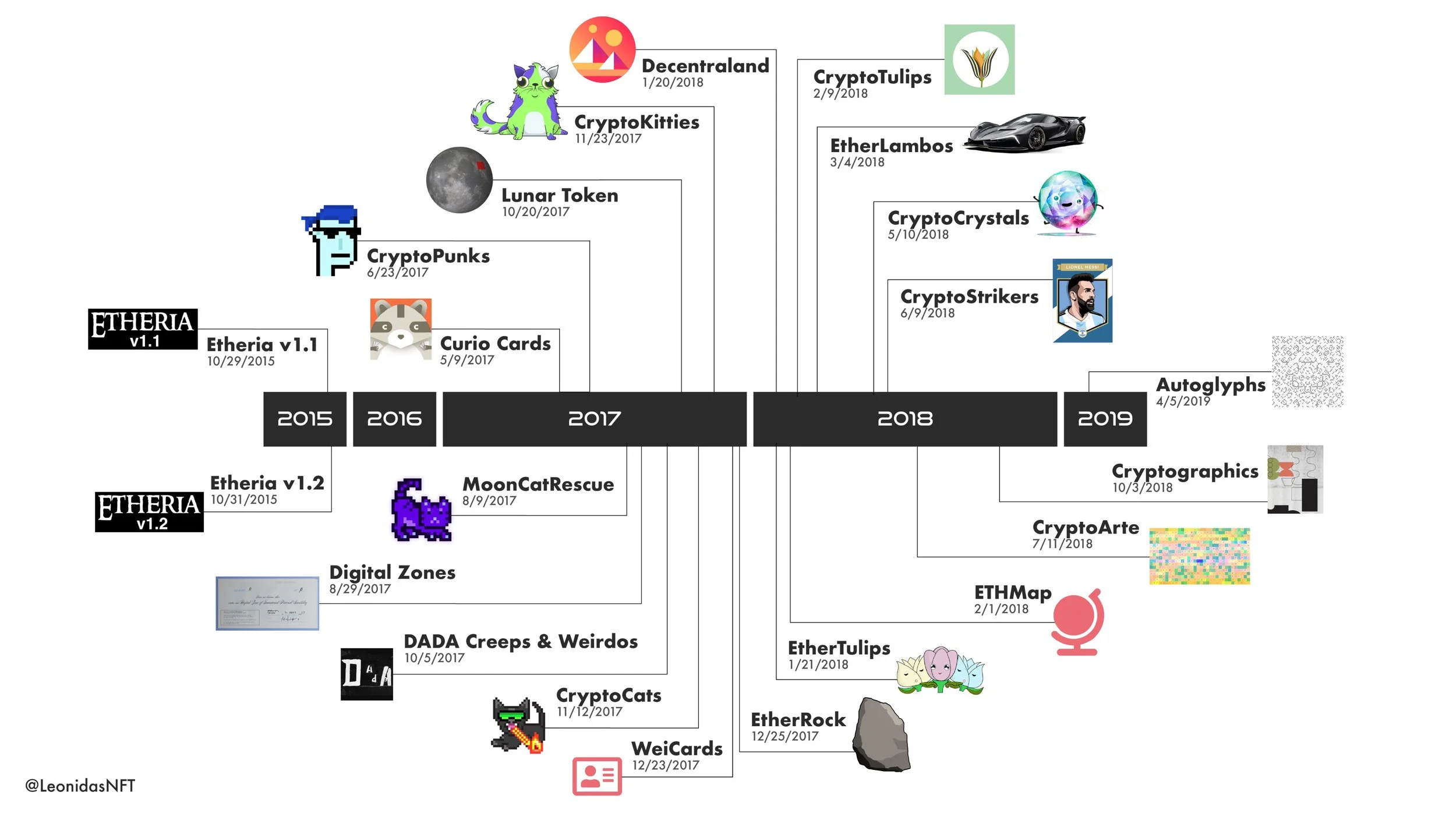
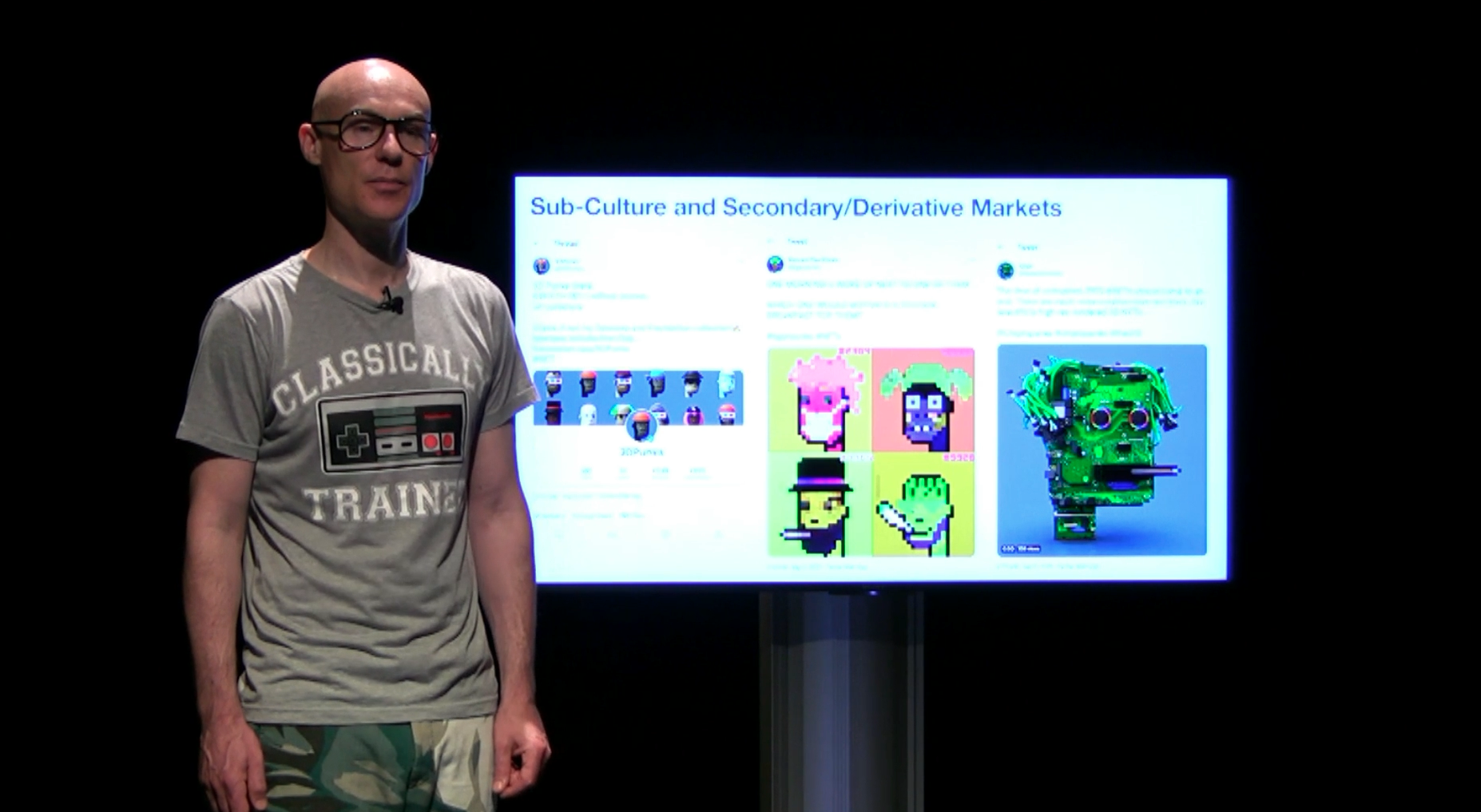
Working collaboratively with RMIT Blockchain Innovation Hub I worked autonomously to lead the development of course module materials with emphasis on a smooth user learning experience. The research, design and development focused on providing guidance on simplifying, safely navigating and interacting with complex integrations of Web 2.0 (IP/ISP) and Web 3.0 Fintech (Blockchain) ecosystems. This project demonstrates my capacities with working as a Blockchain and Fintech focused interdisciplinary researcher and designer. User research and experience design focused generating best practice and critically industry informed course design modules as a practical introduction to creative Blockchain applications.



Deliverables:
My outputs included designing a learning experience that integrated demonstrated design and social context for:
Blockchain-curious learners who wish to satisfy their interest in understanding how underlying blockchain mechanics facilitates the use of digital assets for minting, tokenomics and trading
Game designers and Gamers who wish to understand how blockchain disrupts current models for trading digital assets within game environments
Professional marketers who wish to build applications for creative blockchain campaigns
Promoters who wish to understand and use blockchain for ticketing and credentials
Digital artists who wish to build and sell NFTs of their own artwork
Investors and entrepreneurs who wish to gain financial reward from NFTs

Key Insights:
This project amalgamated a research and design focus on innovative industry and user integration research to design and social context for digital assets. Learning outcomes focused on:
Explain uses and opportunities associated with blockchain and digital asset networks
Understand basic tokenomic structures of fungible and non-fungible tokens
Perform the necessary steps to mint an digital assets to a blockchain
Understand & execute utilities and procedures of blockchain based digital asset mint & transaction
Examine and engage with execution of procedures of IP rights & regulations
Understand integrations of technical and social jargon within Blockchain communities
Identify and interact with an digital asset networks and communities
User Feedback Examples:


Full Stack E-Course
Full StACK | Digital E-Course
edu Design & Development
Full Stack E-Course
Full StACK | Digital E-Course
edu Design & Development
Nurobodi Qi Gong – Digital Course Design & Development
#EducationDesign #InstructionalDesign #CourseDevelopment
#CurriculumDesign #LearningExperienceDesign #DigitalLearning
#OnlineEducation #WebDevelopment #FullStackDevelopment
#FrontEndDevelopment #UXDesign #UIUX #ResponsiveDesign
Overview
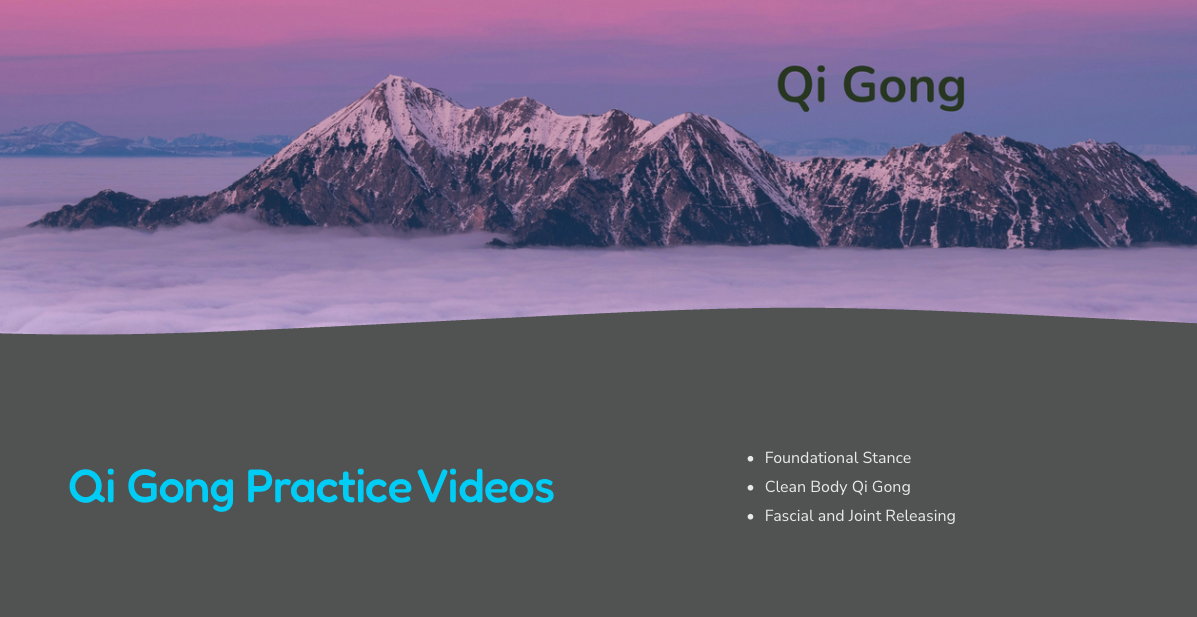
Nurobodi Qi Gong – Heart of the Mountain – is a six-week online wellness course I designed and developed to blend traditional Qi Gong practice with a modern digital learning experience. As both the instructor and technical lead, I built the front-end interface and the full-stack course infrastructure, integrating secure payment processing and an intuitive user experience. The project showcases my unique combination of educational content creation, web development expertise, and user-centered design.


Project Summary
Drawing on my 15+ years of Qi Gong practice, I designed a progressive six-week curriculum that built learners' skills incrementally. I wrote lesson notes, filmed and edited demonstration videos, and recorded audio meditations to provide a comprehensive learning experience.
On the technical side, I managed the full web design and development process. I designed the front-end to reflect Nurobodi’s calm and professional brand identity, using serene imagery and clean layouts to create a welcoming user experience. I optimized the interface for simplicity and clarity, ensuring intuitive navigation for users to sign up, log in, and access course materials.
Beyond the interface, I built the full-stack course structure — handling user registrations, course content delivery, and secure payment processing. I integrated an e-commerce system to support one-time payments, discount codes, and automated confirmation emails. I also created a members-only area where students could log in to stream weekly content and download resources.
Throughout, I focused heavily on user experience design: streamlining enrollment, clarifying calls to action, and enabling additional support options such as one-on-one coaching sessions and free consults — all seamlessly embedded into the platform.
This project allowed me to fully align content and technology, creating a smooth and engaging learning journey where the platform structure supported the educational flow at every stage.



Deliverables
Online Course Platform: Fully responsive web platform for the six-week Heart of the Mountain course, with a public landing page and secure members-only area.
Curriculum & Multimedia Content: Complete curriculum design including over 90 minutes of video instruction, multiple audio meditations, written theory notes, and downloadable practice materials.
E-Commerce Integration: Secure payment setup for course enrollment, including discount code functionality and automated onboarding emails.
User Experience & Visual Design: End-to-end UX design with an emphasis on calm, accessible navigation and mobile responsiveness, styled consistently with the Nurobodi brand.
Support & Interaction Features: Built-in options for users to schedule 1:1 coaching sessions and consultations, offering personalized learning support beyond the self-paced content.
Key Insights
Holistic Ownership Improves Quality: Owning both the content and technical development allowed me to ensure a seamless integration between the course material and the platform design. Every element of the experience reinforced the educational goals.
User Experience is Critical for Online Learning: By prioritizing intuitive navigation and clear structure, I made it easy for learners to stay engaged over six weeks — significantly improving course completion and satisfaction.
Multimedia Enhances Learning Outcomes: Offering video, audio, and written materials helped support different learning styles, increasing retention and accessibility across a diverse student base.
Technical and Creative Skills Combined Deliver Stronger Results: The ability to handle design, development, and educational strategy meant I could quickly adapt the platform based on feedback and ensure the entire experience — from marketing to learning — felt cohesive and professional.
Testimonials
Testimonials
Testimonials
Below are some testimonials from alumni and students I have tutored, lectured and mentored.
I’m Available For
Curriculum Design & Development
Course design from scratch, module development, assessment frameworks, and learning experience architecture for emerging technology programs.
Guest Lectures & Workshops
Specializing in affective design, responsible AI, immersive technologies, UX/CX, and practice-based research methodologies.
Pedagogical Consultation
Course audits, learning outcome alignment, industry partnership development, and educational technology integration.
Research Supervision
Postgraduate and undergraduate research mentorship in digital design, emerging technologies, and interdisciplinary innovation.
Professional Development
Educator training in contemporary pedagogical approaches, blended learning, and industry-academic collaboration.